

Last Updated: October 26, 2026
Quick Summary
Plant-based skincare builds its formulas from botanical oils, extracts, and butters, while conventional skincare often relies on lab-made synthetic ingredients as its primary actives. Neither approach is automatically better, since performance depends on the specific ingredients, their concentration, and how the formulation delivers them to your skin barrier.
- Ingredients are listed by weight, so the first five tell you what the product mostly is.
- Natural does not mean hypoallergenic or fragrance-free, and botanical formulas carry real irritation risk.
- Introduce one new product every two weeks so a delayed reaction has time to surface.
- Patch test on the inner forearm for 24 hours, then repeat on the jawline.
- Compare cost per application rather than price per bottle, weighing in how quickly a product expires.
Table of Contents
- Plant-Based vs Conventional Skincare: The Core Differences
- Plant-Based Skincare Ingredients vs Synthetic Actives
- Plant-Based Skincare Benefits: What the Evidence Supports
- Plant-Based Skincare for Sensitive Skin: Managing Irritation Risk
- Plant-Based vs Conventional: Pros, Cons, and Where Each Falls Short
- Best Plant-Based Skincare Brands: What to Look For
- Choosing Your Plant-Based Routine at Lauderma
- Frequently Asked Questions
Plant-Based vs Conventional Skincare: The Core Differences
Neither approach is automatically better. A skincare product's performance depends on the specific ingredients, their concentration, and how the formulation delivers them to your skin barrier.
Plant-Based Skincare Ingredients vs Synthetic Actives
Plant-based skincare ingredients include plant oils, botanical extracts, and herbal extracts such as tea tree, turmeric, and licorice root, which appear in many of our own formulas. Synthetic actives are lab-created compounds, like sodium ascorbyl phosphate, a stable vitamin C derivative you'll find in our Vitamin C facial serum.
Here's what most guides miss: a single product can contain both. "Plant-based" doesn't mean zero synthetics, and "conventional" doesn't mean zero botanicals. Read the ingredient list, not the front label.
Reading the Ingredient List: What Order Tells You
Ingredients are listed by weight, highest to lowest, until you reach the final stretch of the list where concentrations drop below a certain threshold. That means the first five ingredients tell you what the product mostly is.
For a deeper look at which humectants and botanical ingredients actually hold moisture in the skin, our guide to botanical ingredients for deep skin hydration breaks down the hydration side in detail.
Plant-Based Skincare Benefits: What the Evidence Supports
The benefits plant-based skincare can realistically deliver are hydration, soothing, and antioxidant support, not miracle-level transformation. Plant oils and butters help reinforce the skin barrier and reduce moisture loss.
The honest caveat: "plant-based" is not a regulated performance claim. Many businesses find that results depend far more on consistent use and correct formulation than on whether the ingredient started in a plant or a lab.
Plant-Based Skincare for Sensitive Skin: Managing Irritation Risk
Plant-based skincare for sensitive skin can work well, but it carries a real irritation risk that "natural" marketing tends to downplay. Natural does not mean hypoallergenic, and it does not mean fragrance-free.
Why Botanical Formulas Can Irritate
Two mechanisms drive most reactions:
- Allergic contact dermatitis, the immune system recognizes a specific compound and reacts on repeat exposure. Reactions can appear only after several uses, which is why a product that "worked fine" for a week can suddenly sting.
- Irritant contact dermatitis, direct barrier damage from acids, exfoliants, or high concentrations of active botanicals. This shows up faster and is dose-dependent.
A plant-derived ingredient is not inherently gentler than a synthetic one. Some of the most irritating compounds in skincare occur in nature, and some of the best-tolerated actives are lab-made.
Common Triggers to Scan For
- Some essential oils and their isolated components (citrus oils, peppermint, eucalyptus, lavender)
- Added fragrance and parfum
- Preservatives such as methylisothiazolinone, which some sensitive skin reacts to (pubmed.ncbi.nlm.nih.gov)
If your skin is reactive, favor short ingredient lists, skip heavily fragranced formulas, and introduce one new product at a time. For a focused list of gentler options and a full routine built around reactive, acne-prone skin, see our roundup of the best plant-based skincare brands for sensitive skin.
A Safe Product-Switching Routine
Switching from a conventional routine to a plant-based one is where many people get into trouble, they swap everything at once and can't tell what caused a reaction.
- Keep your cleanser and moisturizer stable while you introduce one new product.
- Patch test first (steps below) before any full-face use.
- Introduce one product every two weeks so a delayed reaction has time to surface.
- Add actives last, serums and exfoliants are the most likely to irritate, so layer them in after your base routine is settled.
- Keep a simple log of what you used and when, so you can trace a reaction to its source.
How to Patch Test a New Product
- Apply a small amount to your inner forearm or behind the ear
- Leave it uncovered for 24 hours without washing the area
- Check for redness, itching, or swelling
Shelf Life and Stability Matter for Reactive Skin
Preservative-light botanical formulas can degrade faster, and an oxidized oil or spoiled emulsion is more likely to irritate sensitive skin than a fresh one. Check expiration and storage guidance on each product, store away from heat and direct sun, and discard anything that smells off or has separated. Stability is a safety feature, not a marketing point.
Plant-Based vs Conventional: Pros, Cons, and Where Each Falls Short
Both approaches have genuine trade-offs, and pretending otherwise does neither side any favors. The useful comparison isn't "plant good, synthetic bad", it's a set of specific trade-offs you can actually evaluate on a label.
First, Untangle the Labels
Most shoppers conflate five terms that mean different things. Getting them straight is the fastest way to compare products without relying on marketing copy.
- Plant-based describes ingredient origin: the formula's base and many actives are derived from plants. It says nothing about safety, sustainability, or whether synthetics are also present.
- Natural is loosely defined and largely unregulated as a cosmetic claim. A "natural" product can still contain lab-made preservatives, and a plant-derived ingredient can be chemically processed.
- Organic refers to agricultural sourcing and, for cosmetics, is typically backed by third-party certification of farming and processing, not a guarantee of performance or low irritation.
- Clean is a retailer- or brand-defined marketing term with no single standard. Two "clean" lists can disagree completely.
A product can be vegan and synthetic, or plant-based and not organic. Read the ingredient list and any certification seals, not the front of the bottle.
Where Each Approach Genuinely Wins
Conventional strengths: lab-made actives like sodium ascorbyl phosphate, niacinamide, and salicylic acid can be produced at precise, stable concentrations with predictable shelf life; standardized manufacturing reduces batch variation; and many have the deepest clinical evidence base in dermatology.
Conventional weaknesses: some formulas rely on ingredients reactive skin tolerates poorly (certain fragrance mixes, drying alcohols, some preservatives); labeling can feel opaque; and "conventional" says nothing about environmental footprint.
How to Judge the Evidence Behind a Claim
This is where most comparisons stop short. Three levels of evidence get conflated:
- Laboratory findings, a botanical shows antioxidant activity in a petri dish. Suggestive, not proof it works on skin.
- Clinical studies on the ingredient, a controlled trial of a specific concentration in a vehicle. Stronger, but the finished product may use a different dose or base.
- Finished-product evidence, testing the actual formula as sold. The most relevant, and the least common.
Concentration and formulation decide whether an ingredient does anything. A botanical listed near the bottom of an ingredient list is likely present in trace amounts; a well-formulated synthetic active at a proven percentage can outperform a poorly formulated botanical one, and vice versa. Judge the formula, not the origin story.
Cost and Value per Use
Price per bottle is misleading. Compare cost per application by dividing price by the number of uses, and weigh that against how quickly a product expires. A preservative-light botanical formula that spoils before you finish it costs more per use than its sticker price suggests. Our breakdown of whether expensive skincare is worth it walks through that math so you can judge value per use rather than per bottle.
Best Plant-Based Skincare Brands: What to Look For
The best plant-based skincare brands share a few traits: full ingredient disclosure, realistic claims, sensible preservative systems, and formulas matched to a specific skin concern rather than vague "glow" promises.
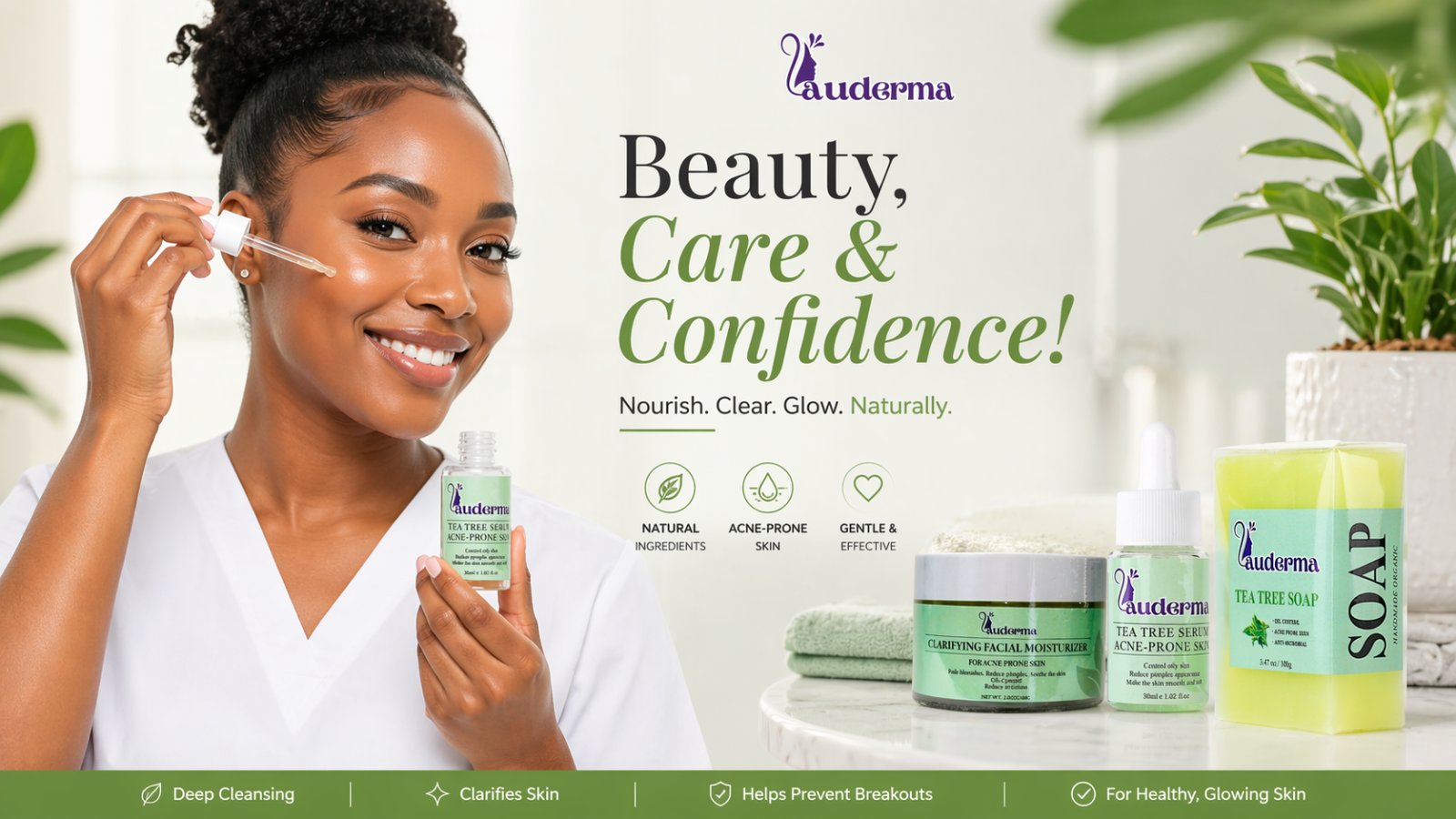
We'll be direct about our own line: our Tea Tree Acne Prone Duo ($36.99) pairs a handmade tea tree soap with a facial serum built around tea tree extract and licorice root for acne-prone skin and the look of dark spots.
Product |
Price |
Best For |
|---|---|---|
Tea Tree Acne Prone Duo |
$36.99 |
Acne-prone skin, dark spots |
Turmeric Brightening Face Soap |
$12.99 |
All skin types, radiance |
Acne Prone Clarifying Soap |
$13.99 |
Persistent breakouts |
Turmeric Glow Face and Body Scrub |
$14.99 |
Exfoliation, body care |
Vitamin C Facial Serum |
$31.99 |
Brightening, uneven tone |
Best for: readers who want transparent botanical formulas with clear expiration and storage guidance. Skip if: you need a non plant based formula, since several of our products include essential oils backed by published research evidence.
Choosing Your Plant-Based Routine at Lauderma
Switching to a plant-based routine doesn't require a cabinet overhaul. Start with one cleanser, one treatment serum, and one moisturizing step, then patch test each addition before layering in the next.
If you're ready to commit, our Why Choose Lauderma page explains what guides our formulations, and you can browse the full Facial Care range to build a routine around your skin type.
Frequently Asked Questions
What is the difference between plant-based and conventional skincare?
Plant-based skincare builds its formulas around botanical ingredients such as plant oils, extracts, and essential oils. Conventional skincare relies more heavily on synthetic ingredients, including lab-made preservatives, emulsifiers, and active compounds. The line is not absolute: many plant-based products still use some synthetic preservatives to keep formulas stable. What matters is the full ingredient list, not the label on the front of the bottle.
Is plant-based skincare better for sensitive skin?
Not automatically. Plant-based skincare for sensitive skin can be gentler, but botanical ingredients like some essential oils and herbal extracts are also common allergens. Contact dermatitis and irritation can come from natural sources just as easily as synthetic ones. Patch test any new product on your inner forearm for 48 hours before using it on your face, and introduce one product at a time so you can identify what caused a reaction.
Can plant-based skincare be as effective as conventional skincare?
Yes, for many skin concerns. Plant oils and extracts can moisturize, soothe, and support the skin barrier. However, effectiveness depends on ingredient concentration and formulation quality, not on whether the source is a plant. A well-formulated plant-based serum with proven actives can perform as well as a conventional one. Check where key ingredients sit on the list and whether the brand publishes full ingredient breakdowns.
What are the pros and cons of plant-based skincare?
Pros include gentle hydration, botanical antioxidants, and appeal for people who want transparency about sourcing. Cons include a higher irritation risk from essential oils, shorter shelf life because natural oils oxidize, and inconsistent product stability between batches. Neither category is safer by default. Match the formula to your skin type and read the ingredient list rather than trusting front-of-pack claims.
How do I switch from conventional to plant-based skincare safely?
Replace one product at a time, starting with your cleanser, and wait two weeks before swapping the next. Keep a simple routine: cleanser, moisturizer, and sunscreen. If you have acne-prone skin, look for plant-based formulas with salicylic acid or tea tree, and pair them with a gentle non-stripping cleanser. Stop any product that causes burning, redness, or peeling, and contact a healthcare provider if irritation persists.
The hardest part of plant-based skincare isn't finding products, it's finding formulas that disclose what's inside and set realistic expectations. Lauderma builds botanical-based formulas with openly listed ingredients, clear expiration dates, and products for acne-prone, sensitive, and combination skin, from the Tea Tree Acne Prone Duo to the Vitamin C facial Serum. Get started with Lauderma and build a routine you can actually understand, one patch-tested product at a time.
